
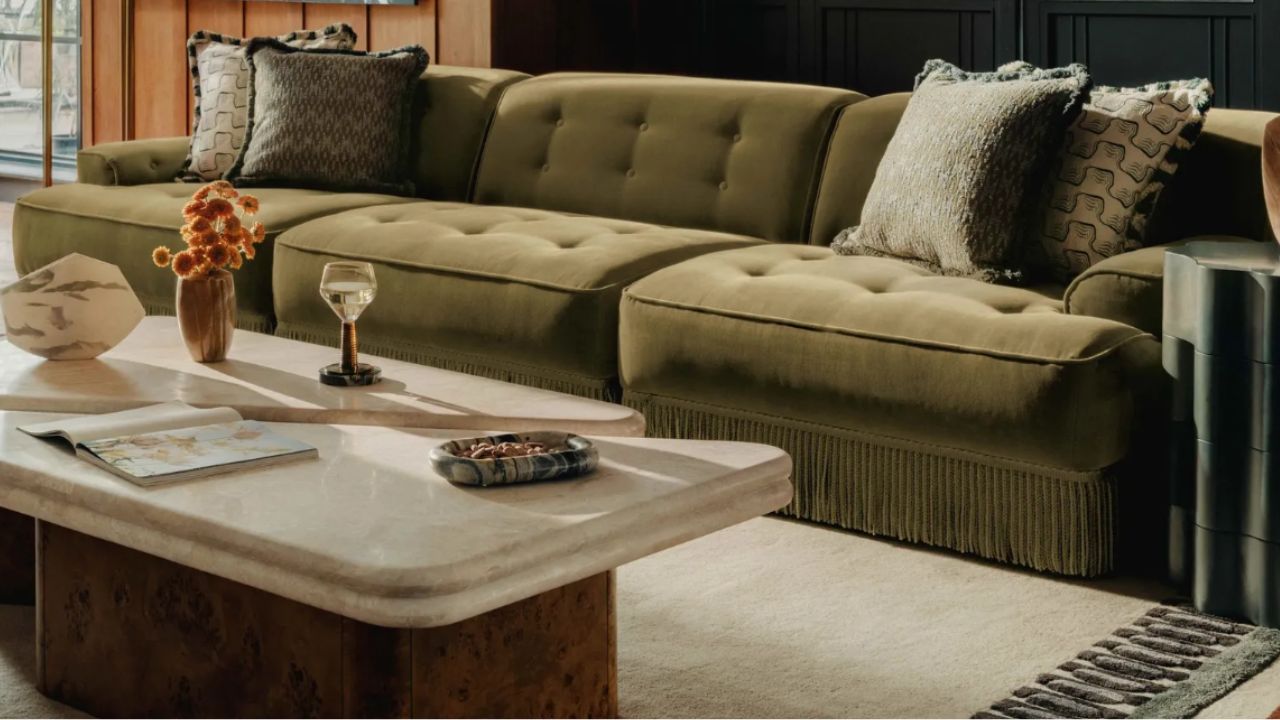
For years, fringed sofas were considered an “old-fashioned” relic of traditional décor. However, according to an article published by Livingetc, this aesthetic is undergoing a sophisticated revival in 2025 — and interior designers are rediscovering the charm of this textile detail with a contemporary approach.
+ Jennifer Garner reveals her magical reading nook with Art Deco stained glass and cozy design
The so-called passementerie, or the art of decorative upholstery and trimmings, has always been associated with opulent and aristocratic environments. Yet, as Livingetc highlights, the renewed interest in this technique is far from retro: it’s about reinterpreting textile luxury with subtlety and personality.
Sensory designer Lauren Davies, from HEKA, notes that there is something “incredibly rich” about a fringed sofa, both visually and texturally. The secret, she says, lies in attention to detail and how the finish can transform the furniture into a tactile focal point within the space.
According to Marisa Gutmacher from Samuel & Sons — a company specializing in trimmings and embroidery mentioned by Livingetc — fringes originally appeared for a practical reason: to finish the raw edges of upholstered furniture before the development of modern sewing techniques. Over time, they became a symbol of status, especially in the 17th and 18th centuries, when they adorned aristocratic salons and residences with grandeur and refinement.
In the 1920s, the style evolved into a more cinematic glamour, prominent during Hollywood’s Golden Age. Post-war Scandinavian designers, famous for their minimalism, adopted subtler versions, using fringes as a discreet texture among clean lines.
Today, according to designer Charlotte Lucas, this decorative detail has been given new life: “Fringes, tassels, and trims have existed for centuries, but I now see them as jewelry for upholstery.”
Livingetc points out that the launch of the Elowen sofa by Soho Home, scheduled for fall 2025, symbolizes this trend. Designer Rosie Welburn from the brand explains that fringes can add “texture and a touch of luxury without feeling overdone,” making the sofa a modern and elegant piece.
For architect Ester Bruzkus, from Bruzkus Greenberg, the appeal lies in the duality between tradition and modernity: “Fringes are decorative by nature, but when placed in contemporary contexts, they become something bold, sophisticated, and completely new.”
Beyond adding movement and texture, the style also serves as a bridge between old and new. Designer Erika Morris, from Nested Designs, observes that “fringes can make a piece feel truly timeless,” especially when used to balance contemporary silhouettes in classic spaces.
According to Livingetc, the secret to updating the look lies in juxtaposition. Ester Bruzkus recommends pairing fringes with minimalist forms and raw materials, creating a contrast between craftsmanship and clean architecture. The result is a sophisticated and confident atmosphere, far from any exaggerated nostalgia.
With renowned designers embracing fringed sofas for 2025, Livingetc concludes that passementerie — once a symbol of the past — returns as a synonym for elegance and creativity. For those who want to experiment with the trend without replacing their sofa, adding fringes by hand is a simple way to transform upholstery into a sculptural and personalized piece.
Source: Livingetc. This content was created with the help of AI and reviewed by the editorial team.
